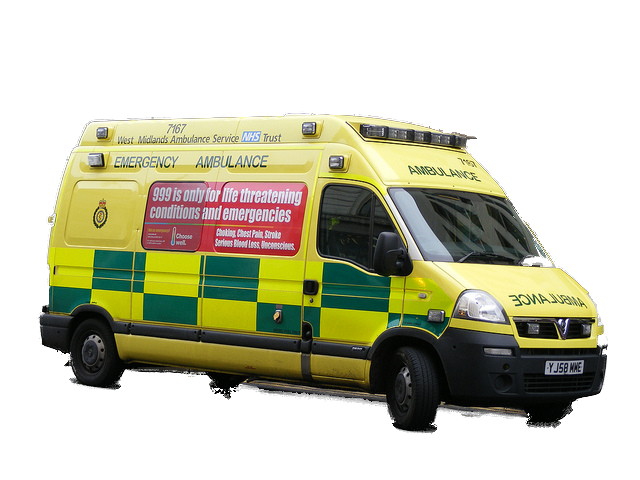
Ludlow Hospital Under Attack

The quotes in this article are taken from messages, emails and comments from Ludlow people over the last few days.

On 30th July, Shropshire’s Community NHS Trust confirmed the closure of Stretton ward, one of the last two remaining in-patient wards at Ludlow Hospital.

How dare you go ahead with such a major decision without even consulting the GPs?  And press release a lot of twaddle about “doing it for the benefit of the patients”.  What about future patients who will need beds – what are they to do?

This was a disgraceful decision, taken despite overwhelming opposition – from the GPs at Portcullis Surgery, from the Town Council, from our three local councillors on Shropshire Council, from Ludlow Hospital League of Friends and from Philip Dunne MP. A public petition attracted an astonishing 2666 signatures in a matter of days. The ward closure is a move that reveals astonishing arrogance, and a genuine contempt for local people.

Continue reading

Ludlow Hospital: Playing games with bed numbers

‘No reduction in beds’. That’s the claim of bosses at Shropshire Community Trust as they seek to justify closing one of the two wards at Ludlow Hospital. Is this actually true?

On Monday 27th July, the website of Shropshire Community Trust had this to sayLudlow Community Hospital is a two ward, 40-bed hospital in southwest Shropshire.

By Tuesday 28th July, the website has been amended. Now we are told: Ludlow Community Hospital is a two ward, 24-bed hospital in southwest Shropshire.

SpotTheDifferenece

The number of beds has been reduced by almost a half – seemingly on a permanent basis, with no public consultation whatsoever. Continue reading

Learning how to cover up superbugs?

The Shropshire Star has reported (“American experts to lead improvements at Shropshire hospitals”) that the NHS is bringing in so-called experts from Virginia Mason Hospital in Seattle in a bid to improve care at the two local hospitals.

They don’t report that this is costing the NHS $13 million (over £8 million) at a time when the local NHS is strapped for cash. So what are we going to get for our money?

Probably a lesson in how to cover up damaging problems. The experts come from the same Virginia Mason where 11 patients died as a result of a superbug infection. The outbreak ran from November 2012 to March 2014. Virginia Mason officials have admitted that they declined to inform patients or the public – and the superbug outbreak only became known at an infectious disease conference in October last year. According to a news report: “None of the patients nor their families was notified that they were part of an outbreak, hospital and health officials said.”

Continue reading

Shropshire Defend Our NHS Newsletter

The latest announcement from local NHS bosses confirms that they will try to close one of our A&Es and hospitals in Shropshire, and that they will try to push this through quickly. It’s time for us to get organised!

Can you come to the Shropshire-wide planning meeting for supporters of Shropshire Defend Our NHS? We have a campaign to build!

2.00 pm to 4.00 pm, Saturday 13th June

Lecture Hall, United Reform Church
Coleham Head, Shrewsbury SY3 7BJ
(near the English Bridge)

After the election, what’s happening in Shropshire?
We were expecting a decision to be taken on 12th June that would determine the fate of our local hospitals: the Royal Shrewsbury and the Princess Royal, Telford. The crucial meeting has been postponed by NHS bosses. They say they’re waiting for ‘new priorities and possible funding plans’ from the new government.  Is this delay good news for Shropshire’s NHS?

No!

The public statement put out by NHS bosses confirms that they intend to close one of our A&Es, and most of the beds and services that operate from that same hospital. Shockingly, they then go on to say that a single emergency centre (A&E and hospital) ‘needs to be in place as soon as possible’. All sorts of things can be put on hold – but the drive to close down our A&E and hospital is apparently relentless.   

There’s a level of complexity about what’s happening. The original promises about changes to the NHS in Shropshire included ‘integrated care’ and ‘care closer to home’. There was always the desperately worrying strand of work to close down one of our two A&Es and hospitals, but there were some genuinely good ideas as well. Work streams were meant to take place alongside the hospital closure plans that would look at ‘planned care’ and care for people with ‘long term conditions’.

None of this work has actually happened – and it increasingly looks like it won’t happen in any meaningful form.  The driver for change is to cut costs. The hospital trust predicts an £18 million deficit this year, and its recovery plan is to make cost savings of £12 million a year. That’s why they are so desperate to close down an A&E and hospital. Shrewsbury Hospital is in the firing line, but Telford’s Princess Royal faces likely cuts as well (and the pressure on the remaining A&E and the reduced number of hospital beds will be enormous).

Is it possible that brilliant community based services can be created in Shropshire, as an alternative to hospital care? No – for the simple reason that the NHS and social care (in Shropshire and the rest of England) face real terms spending cuts.  Our GPs do an excellent job, but have a workforce and workload crisis of their own. It’s laughable to suppose GPs can magically absorb a 30% increase in workload as the A&E and hospital close, and the number of hospital beds is slashed. The social care services provided by Shropshire Council have already been cut to the bone, with Telford and Wrekin services not too far behind. Shropshire’s NHS Community Trust does the best job it can with limited resources, but the number of district nurses has already been cut, and there is simply no money to plug the huge holes that will be left if a hospital closes down. There is extraordinary games playing continuing around the promised Urgent Care Centres, leaving the future of Minor Injuries Units and Community Hospitals uncertain. Most bizarrely of all, NHS England says that Shropshire’s NHS is overfunded! There is a shocking lack of understanding at national level about the health needs of rural communities.

Combine all this with the shocking £22 billion deficit built into the new government’s NHS funding plans, and it’s clear that new money for Shropshire’s NHS will not be found without a fight. All the claims that the Future Fit project in Shropshire is about better healthcare are ‘spin’. This is why the latest delays are not good news. This is about cover for delaying an unpopular public announcement and for kicking into touch the empty promises of better healthcare.

Two final points need to be made.

Shropshire’s NHS bosses claim again and again that ‘clinicians’ support their plans. We have spoken to many GPs, hospital doctors, A&E nurses and other hospital nurses, community nurses and therapists… skilled professionals who tell us that the closure of one of our A&Es and hospitals would be an absolute disaster.

And should we wait and see what happens (the position of some of our local MPs)? There is a telling phrase in the latest public statement:-

Dr Caron Morton of Shropshire CCG and Mr David Evans of Telford & Wrekin CCG said: “We have to make sure we make the best decisions before we choose a preferred option that we will consult the public about…”
So, they decide, they choose – and then and only then do they go through a ‘consultation’ where the outcome is already determined. NHS bosses have made a disastrous mistake. They have forgotten that it is their job to serve us, the public, and to be accountable to us.

It’s essential that we fight hard for what we’ve got. That means that we have to defend both our A&Es and both our acute hospitals. Our two hospitals serve a population of 540,000 people, in an area of over 2000 square miles, across Shropshire, Telford and Wrekin and Powys. Both of our hospitals must stay.

Please come to the planning meeting: 2pm, Saturday 13th June, United Reform Church, Shrewsbury SY3 7BJ.

Gill George, Chair
Julia Evans, Secretary

Shropshire Defend Our NHS 

Philip Dunne

On 15th May, we emailed Philip Dunne MP asking him to support the retention of an A&E and acute hospital in Shrewsbury. We explained that over 1000 constituents had signed an open letter to him asking him to reconsider his position of refusing to back the A&E. The email is here.

The signatures were gathered in an extraordinarily short period of time, most of them within a ten day period prior to the general election. The strength of feeling around the issue was immense.

We asked for a small group of signatories of the open letter to have the opportunity of meeting Mr Dunne, to raise our concerns over the risk to Ludlow constituents if we lose our A&E and acute hospital.

Sadly we have not yet had a reply (although it was clear from a recent newspaper column that Mr Dunne had received the email). Mr Dunne’s reasons for not backing our A&E and hospital seem to have changed over time – but he remains consistent in his refusal to call for Shrewsbury’s A&E and hospital to stay open.

We will of course be contacting Mr Dunne again, and we will re-request a meeting with him. We had hoped he would listen to 1000 constituents. It is worth being clear, though. If we lose our A&E and hospital in Shrewsbury, and critically ill patients have to travel on to Telford, some of us within Ludlow constituency will die. We will not die along party political lines. We will die because the care we need when we are critically ill has been taken away through NHS cuts, and because longer ambulance journeys cost lives.

Of course MPs make a difference when it comes stopping A&E and hospital closures, and having Philip Dunne on board could be decisive in keeping the Royal Shrewsbury Hospital open. We need our two A&Es and our two acute hospitals in Shropshire – in Shrewsbury just as much as Telford. Telford is simply too far to travel if you live in South Shropshire. This is not about party politics. It is about people’s lives.

Gill George (Ludlow resident)

Press Release: Want a straight answer to a straight question? Ask a politician – but only sometimes!

A few weeks ago, straight questions on the NHS were put to every Parliamentary candidate in Shropshire. The process was entirely above board, open and transparent. In each constituency, a registered voter wrote to their local candidates. Evidence was given to candidates about the escalating crisis in the NHS. Candidates were asked to respond to questions on NHS finance, locally and nationally, on privatisation of clinical and support services in the NHS; and on the threats to one of our A&E units and the hospital on the same site.

Evidence was made available to candidates about what’s now happening to the NHS. We told them about the £18 million deficit in the budget of the organisation running the Royal Shrewsbury and Princess Royal Hospitals. We told them about the deliberate, planned and engineered £30 billion black hole in NHS finance nationally. We told them about the impact of declining investment in the NHS: the 76% of acute hospitals in debt, and the winter of A&E chaos that the NHS has endured. We told candidates about escalating privatisation, describing some of the massive NHS contracts that are now being awarded to big business. We told them of the risks of having a single A&E in Shropshire, covering a patient population of 540,000 over 2000 square miles.

And what happened?

This is what we asked local Parliamentary candidates. A more detailed analysis, including individual responses, is here.

One candidate (Owen Paterson) entered his name on the survey, but sadly didn’t want to tell us anything about his views on the NHS[1].

Ten candidates completed the survey: all five Green Party candidates, three Labour Party candidates, and one candidate each from the Liberal Democrats and UKIP.

One Liberal Democrat sent us an email saying he was not going to complete the survey. One Conservative candidate sent an email that was about the NHS but did not respond to any of the evidence we had provided about finance, privatisation, or what’s happening to our local hospitals. Continue reading

Press Release: “Trust me, I’m a politician”

Why NHS campaigners are launching their own manifesto: Manifesto for our Health Service

It’s election time again, and Parliamentary candidates from all parties claim that the NHS is safe with them.

In Shropshire, we’re entitled to be cynical. Our hospitals are going bust, with the Royal Shrewsbury and the Princess Royal between them borrowing £12 million in the last year just to keep the doors open1. We face the loss of one of our A&Es and one of our acute hospitals – as part of the ‘Future Fit’ plans that the clinical experts in the West Midlands say are risky and not evidence based2. The ambulance service is catastrophically under-funded and slipping further and further away from meeting national response time targets for 999 calls3. The future of our community hospitals remains uncertain, with no clear commitments around urgent care provision in rural areas, and our Minor Injuries Units threatened with closure4.

Privatisation is steadily eroding public ownership and accountability, with the part-privatisation of services including audiology, dermatology, optometry and pain management. Private companies in Shropshire also now run GP practices, Walk In Centres and the new Urgent Care Centre that has replaced part of A&E at the Royal Shrewsbury Hospital5. In an NHS run on free market lines, every bit of privatisation undermines the viability of NHS providers.

We need to know what our wannabe politicians think – not just sitting MPs, but every Parliamentary candidate in Shropshire and Telford and Wrekin. That’s why, in Shropshire Defend Our NHS, we’ve decided to ask them. We’ll be writing to them with our own manifesto6our outline of the minimum conditions required to keep an NHS that’s fit for purpose. We reserve the right to publish their responses!

Joyce Brand, speaking for Shropshire Defend Our NHS, said:

“With a general election coming up, we want to put our politicians on the spot. They can all say ‘Trust me, the NHS is safe’ – but do they actually mean it? Will they fight to keep our A&E open? Will they stop the closure of one of our local acute hospitals, Shrewsbury or Telford? Will they stand up to party leaders who demand more cuts and more privatisation?  We want to know. That’s why our members will be contacting all Parliamentary candidates locally to find out if they’ll really defend the NHS, or if it’s all hot air. We’ll be very happy to publicise the results”. Continue reading

Campaign Update

The threats to the local NHS have never been clearer. It’s time for us, as ordinary users of the NHS, to take back control from the bureaucrats who are cutting and privatising vital services.

We’re now working with a legal firm called Leigh Day – the top lawyers in the country when it comes to defending the NHS. They’re helping us protect the A&E at the Royal Shrewsbury
Hospital against cuts and privatisation that are threatened as soon as 1st December (i.e. less than a week away).  In a situation as desperate as this, and when local NHS bosses are acting without public consultation, we felt we had no choice about seeking legal support.

Leigh Day have offered to let us pay whenever we can raise the money – but they can’t work for nothing. We’re a community organisation. We don’t have rich backers. We’re appealing for your help in raising the money we need to keep campaigning. Can you spare £5 or £10? Would it be possible to do a collection in your workplace or community group? Do you belong to a trade union or another organisation that might be able to make a donation? Please help us out if you can.

Cheques should be made payable to ‘Shropshire Defend Our NHS’ c/o 102 Corve St, Shropshire SY8 1EB.

Would you consider writing to your MP and to the newspapers as well? Please see the end of this updatefor more ideas!

So what’s actually happening?
Continue reading

“We’ve dropped the national target. No we haven’t. Well, we might have done, but please don’t tell anybody.”

We had a small but important victory in October. We had expected that the Council’s ‘Health and Adult Social Care Scrutiny Committee’ would vote to endorse local NHS plans to scrap national ambulance response targets. (We knew that they had been asked to do this because the Chair of the Committee, Councillor Dakin, told this to a Health and Wellbeing Board on 10th October). In the event, no vote was taken – and councillors were told by the Chair that the report on ambulance targets was there ‘just for information’. Why the change? We had lobbied councillors hard, and the committee would have split down the middle. Probably the vote to attack the ambulance service would have scraped through – but the fight would have been deeply embarrassing to the NHS chiefs who are trying to cover their tracks.

Continue reading

PRESS RELEASE: Ambulance service failing – and set to get much, much worse

WMAS

There is a national target that ‘Category A’ 999 calls – those for immediately life threatening conditions – will be responded to within 8 minutes for 75% of people. This doesn’t mean that every single person, even in the most remote areas, can expect an ambulance within 8 minutes every time – but the view of successive governments has been that 75% in 8 minutes is realistic, and that most people, most of the time, should be reached by an ambulance quickly when they’re at immediate risk of dying.

Not in Shropshire, apparently. Shropshire CCG considered a report on ambulance response times at its Board meeting on 24th September1. The Board heard that the ambulance service was still failing to meet the national target, as it has been for a long time. They dismissed increased funding of the ambulance service as ‘unaffordable within current resources’. They agreed that the solution to failing to meet a national target was to opt out of the national system and abandon the target. A revised target seems to be the one outlined by Julie Davies, Director of Strategy and Service Redesign. She said that the CCG would aim for a situation where no one would wait more than an hour for an ambulance to arrive in response to a 999 call, and this was the target discussed and agreed by the CCG Board.

Continue reading